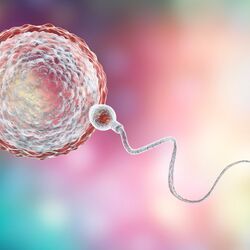
Selection of egg providers
Anyone wishing to be a provider will need to be seen at the Clinic for an initial consultation. At this time the treatment is explained to the potential provider in detail and a general and gynaecological examination is performed to assure that there are no medical problems thatcould prevent you undergoing treatment. Following the initial consultation, the provider is left with the option to pursue the program or to cancel without any obligation. If they are still interested in being a provider they would need to attend a free counselling visit to discuss more fully the implications of donation as well as addressing any of their concerns relating to donation.
Although there is a great need for donors we have to make sure as far as we can that we are not passing any disease or abnormality to a potential recipient through donor eggs. In particular we try to exclude any increased risk of transmitting genetic abnormalities or viral infection. For this reason we can not accept providers over the age of 35 years because of the increased risk of transmitting Downs syndrome.
We ask for a detailed medical and family history to exclude any hereditary disease that could be passed through your eggs. There is a legal obligation for donors to reply truthfully to these questions. Once you have thought carefully about donation and decided that you wish to be an egg provider we need to do blood tests. We would be testing for the following: Blood group. This is important information for the recipient’s pregnancy FSH hormone. This tells us to a limited extent about the fertility of your eggs. If the FSH level is high you would probably not respond well to the drug stimulation we use HIV, Hepatitis B, Hepatitis C and Syphilis To exclude viral infection Chlamydia and a vaginal swab To exclude sexually transmitted diseases Chromosome analysis To make sure you do not have an unknown genetic problem Cystic fibrosis screen. 1 in 25 people in this Country carry a gene abnormality for cystic fibrosis. If you are a carrier it does not mean that you have any medical problem. It just tells us that we cannot fertilise your eggs with the sperm of a man who is also a Cystic fibrosis carrier as this would lead to a 1 in 4 chance of a baby being born with the disease of cystic fibrosis. You could still donate your eggs to a couple where the man is not a carrier. CMV (Cytomegalovirus). This is a very common minor viral infection like rubella. Approximately half of all women have had this infection in the past. If you have had the infection there is a theoretical risk of you transmitting it to a recipient. Therefore we would only donate your eggs to a recipient who had also had the infection in the past The tests are carried out in the strictest confidence. The results will only be given to you unless you request us to do otherwise.